Remote Delivery
Hire a Remote Full Stack Developer Who Can Ship End to End
Reliable remote product development for startups, SaaS teams, dashboards, APIs, and outsourced builds that still need direct ownership.
If you want to hire developer talent remotely, the hard part is not finding someone who knows a framework. The hard part is finding someone who can turn incomplete product context into shipped work without creating new management overhead. That is why remote full stack developer searches usually come from founders and teams who are tired of fragmented delivery, agency layers, and code that looks complete until the first real change request arrives.
I work as a direct technical partner for international clients who need product work shipped across frontend, backend, data, and release concerns. That can mean joining an existing codebase, owning a new feature set, building a product slice from scratch, or acting as the reliable execution layer when outsource development has to feel more accountable than typical outsourced work.
The value of remote collaboration shows up when the developer can absorb context quickly, ask the right questions, and keep the work moving without forcing the client to become a full-time coordinator. That is the standard I aim for. Remote should mean flexible and efficient, not distant and ambiguous.
Who This Is For
Who this page is for
This page is for founders, agencies, and product teams that need remote engineering capacity but do not want the usual outsourcing drag. They want someone who can read context quickly, work across layers, and reduce coordination overhead rather than add to it.
It is especially useful when the work spans more than one discipline at once, such as shipping a feature that touches the UI, API, database, admin flow, and rollout plan together.
Startups hiring outside their local market
You need a remote developer who can move fast, understand business context, and deliver without turning every task into a management project.
Product teams extending an existing app
You already have a codebase and roadmap, but you need a dependable engineer who can own a slice of the product end to end.
Agencies needing a stronger implementation partner
You want a developer who can work directly with design, product, or client stakeholders and keep technical decisions grounded in delivery reality.
Founders replacing a weak outsource setup
The old arrangement created noise, delay, or fragile code, and now you want direct ownership, cleaner communication, and better technical judgment.
Problems Solved
Problems I solve for remote hiring and outsourced development
Remote development is not inherently risky. Weak ownership is risky. The problem is that many remote engagements are set up to produce activity rather than outcomes. Work is split across too many people, context is shallow, and nobody is directly accountable for the full user flow.
When that happens, the client pays twice: once for the initial implementation and again for the cleanup, delay, or communication overhead that follows.
The client becomes the project manager by default
If the developer needs every task broken down into tiny instructions, the client ends up doing coordination work instead of getting leverage. Remote collaboration should reduce management load, not increase it.
Outsourced teams hide uncertainty too long
A common failure mode is waiting until a deadline slips before surfacing technical risk. By then the choices are bad: accept fragile work, cut scope under pressure, or pay for additional time without clarity.
No one owns the product across layers
The UI might look good while the API contract is messy, or the backend might be functional while the user-facing flow is confusing. Without cross-layer ownership, the product can be technically active and still feel unfinished.
Cheap build decisions become expensive later
When outsource development is optimized only for speed, it often leaves behind confusing state management, poor naming, weak validation, and brittle deployment. Those costs do not disappear. They compound.
What I Help With
What you get when remote development is direct and accountable
I work best in setups where direct communication and clear ownership are valued. The benefit is simple: less translation loss between requirements and code, faster feedback loops, and better technical judgment because the person making the decision understands the broader product context.
That does not mean being loose. It means being precise where it matters: scope, workflows, architecture, edge cases, release priorities, and the business reason behind each feature. The goal is to make remote collaboration feel easier than local coordination with the wrong team.
Direct access to the builder
You work with the person writing the code, making the tradeoffs, and understanding the implementation details. That removes unnecessary layers and makes feedback more useful.
A remote full stack developer who thinks in systems
I am comfortable moving from UI states to API behavior to database constraints to deployment concerns. That reduces the common remote problem where every issue gets handed to a different specialist and takes longer to resolve.
Outsource development without agency theater
If you need outside help, you should still get honesty, clarity, and technical ownership. I do not sell a large-team illusion. I focus on useful delivery and decisions that hold up once the product evolves.
A collaboration model built for iteration
Good remote work is steady, reviewable, and transparent. I prefer clear milestones, practical updates, and code that future contributors can understand instead of handoffs that depend on hidden context.
How I Work
How I work with remote clients and existing teams
The process is designed to reduce ambiguity early and keep delivery grounded in the actual product. Whether the work is a feature build, a product extension, or a longer engagement, the operating principle is the same: understand the flow, shape the scope, ship in slices, and keep the codebase healthier than I found it.
Step 1: Get oriented in the business and product context
I look at the current product, the near-term goals, the user flow that matters most, and the constraints around time, scope, and existing code. That keeps the engagement anchored in outcomes instead of generic velocity.
Step 2: Align on the technical approach
For new work, that means defining the stack and system shape. For existing products, it means reading the current codebase, spotting risk areas, and choosing the safest path to delivery without unnecessary churn.
Step 3: Deliver in reviewable increments
I prefer increments that show working behavior and expose the real tradeoffs early. That helps clients give better feedback and keeps remote collaboration concrete rather than abstract.
Step 4: Support the next stage, not just the current ticket
Strong outsourced development should make future work easier. I care about maintainability, handoff clarity, and keeping the system in a state where another release does not feel like a new negotiation with the codebase.
Case Study
QuickHire: the kind of remote product work that benefits from end-to-end ownership
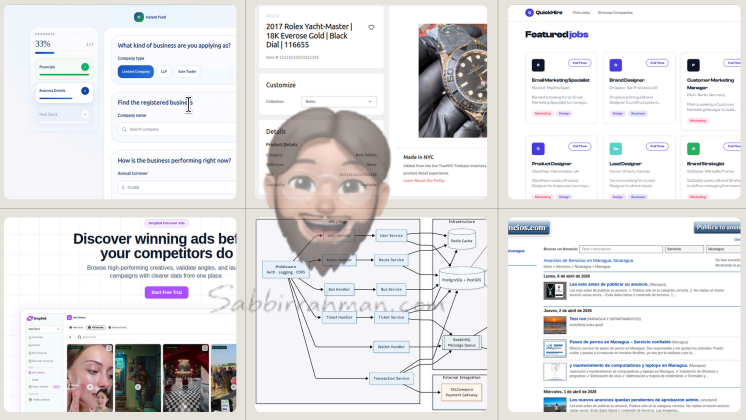
QuickHire shows the value of hiring a remote full stack developer who can keep business logic and product workflow connected. It is a UK geolocation-based hiring marketplace with job posting, company profiles, candidate applications, guest flows, and public tracking, so the success of the product depends on multiple layers behaving consistently.
Built with React, Node.js, and PostgreSQL, the platform was also prepared for monetization-ready backend logic rather than being locked into a one-off prototype. That combination of product clarity and technical ownership is exactly what many clients mean when they want to hire developer support remotely without inheriting the usual outsourcing problems.
Other shipped work reinforces that range. TraxNYC needed a premium commerce experience without losing operational control, Droplink needed a SaaS site layer that could attract and educate customers while building trust, and X Engage Bot had to stay lean while helping brands build their own outreach pipeline. Those are different products, but the throughline is the same: the work has to produce a business result, not just a finished interface.
QuickHire at a glance
- UK geolocation-based hiring marketplace with founder-relevant workflow complexity.
- Job posting, applications, profiles, guest apply, and tracking features connected through shared product logic.
- Monetization-ready backend prepared for paid expansion instead of a throwaway first version.
- Built with React, Node.js, and PostgreSQL as a full-stack delivery stack.
Browse shipped work
See the broader project archive for marketplaces, internal tools, ecommerce builds, and operations systems.
Read the QuickHire case study
Open the project detail page for the UK hiring marketplace used as proof throughout this page.
See Droplink
A SaaS-focused website system built to improve trust, support customer acquisition, and give the team a cleaner growth engine without a bloated stack.
See X Engage Bot
An automation-first engagement tool that helped turn social visibility into a repeatable pipeline-building workflow with lightweight infrastructure.
Why Choose Me
Why clients keep remote work lean with me
Remote work becomes easier when the developer can own the details without becoming opaque. I aim for that balance. You should not need to micromanage to feel informed, and you should not need to decode technical language to understand why a decision matters.
I also care about preserving momentum. Some developers are technically strong but operationally heavy. Some are fast but careless. I try to bring both discipline and pace so the relationship feels like leverage instead of another source of drag.
That combination matters most in outsource development arrangements where trust has to be earned through delivery, not branding. Clear ownership, readable code, and honest tradeoff discussions create a much better remote experience than a bigger team with weaker accountability.
Clear communication without agency padding
You get direct updates, explicit tradeoffs, and no performative jargon. That keeps remote collaboration easier for founders, product owners, and small teams.
Comfortable with both new and existing products
I can build from scratch, extend a live codebase, or take over a partially complete system. That flexibility is valuable when hiring needs change as the product evolves.
Strong technical judgment under real constraints
Not every ideal solution is right for the timeline or product stage. I care about making the best practical decision, not the most impressive-sounding one.
A bias toward long-term usefulness
Good outsourced development should make the product easier to own after the engagement, not harder. I keep that standard in mind while building.
FAQ
Questions about hiring a remote full-stack developer
These are the questions I hear most often from teams trying to hire remotely without repeating the usual outsourcing mistakes.
What kinds of work can you handle remotely?
I work across frontend delivery, backend logic, APIs, databases, dashboards, SaaS features, product extensions, and codebase takeovers where one person owning the full workflow is useful.
How do you keep remote collaboration clear?
I prefer direct communication, visible milestones, and updates that explain tradeoffs in plain language so the client stays informed without needing to micromanage implementation details.
Can you join an existing product instead of building from scratch?
Yes. I can work inside an existing codebase, understand the current product flow, identify risk areas, and extend the system without unnecessary churn.
Call To Action
Need to hire a remote full stack developer without the usual outsourcing friction?
If you need a developer who can work directly with you, understand the product quickly, and ship across frontend, backend, and data concerns, we can talk through the scope and the right engagement shape.
The best remote setup is not the biggest one. It is the one that gives you clean communication, real ownership, and dependable execution.